food

Monday, May 16, 2011

Learning About Japanese History


Learning About Japanese History

One of the most interesting topics in world history is the Japanese history. as we all know, Japan has experienced years of isolation from the outside...

Tomoko Asai

One of the most interesting topics in world history is the Japanese history. as we all know, Japan has experienced years of isolation from the outside world but it did not prevent Japan from rising. Japanese history is rich in culture, events and it can be broken down into periods. There is more to the religious ceremonies, the temples, shrines and parks that you see in this country.
Japanese history began with the migration of humans form the Asian mainland. During the Jomon period, pottery in Japan began. It is also the period when people went out to hunt for food such as fish and meat. The next period in the Japanese history is the Yatoi period wherein rice was brought from Korean mainland. Political and social systems emerged during the Kofun period. Emergence of Buddhism also happened in this time and it influenced Japanese history. Buddhism also came to Japan from Korea. It has led to the widespread literacy because part of the Buddhism teachings is the familiarization of the Chinese classics.
Japanese history then experienced a period wherein clans were inferior because of the rising central government. This political system was based primarily on the Chinese style of ruling. Heian period came next and Kyoto was the imperial capital during that time. However, the Chinese style of political scheme has broken down and so aristocrats were the ones given power to rule some areas. This was the time in Japanese history wherein Minamoto Yoritomo was the shogun. He was busy establishing a capital somewhere else. He hired samurai warriors to protect him and his shogunate. If you want to have a view of the architectural structure built during his reign, you can go to Osaka and see the magnificent Osaka temple. In Japanese history, the isolation happened during the Edo period. Now, Edo is already Tokyo, which is the present capital of Japan. During this period, the merchants played a vital role. In 1868, Meiji restoration happened. It was in this period of the Japanese history when the samurais and shogunates were disbanded.
In addition, the Meiji emperors decided to step into modernization, which was a very significant event in Japanese history. The period next to that is the Taisho period. This was when the country felt an economic boost but after that, the militant period occurred. This was one of the most unforgettable events in Japanese history. Two atomic bombs were dropped in Hiroshima and Nagasaki. Despite the bombings, Japan proved its strength and independence by building a modern culture. This is the period in Japanese history when industrialization was a priority. This has led to the success of Japan and it was recognized throughout the world. Infrastructures, mega-shopping complexes, and tourist spots covered Japan after the wars. Nowadays, tourist spots and buildings are established in Mei, Gifu, and in Nagoya. Shrines are evident in Nagano and in Hokkaido.
Japanese history would never be complete without the modernization and industrialization that happened. Today, it is a country known for its technological advancements and it is pioneer of machinery. Indeed, Japanese history is incomparable. These are just some of the reasons why Japanese history remains as one of the most interesting part in world history.
http://www.centraljapan.jp is a Website of Nagoya Avenues magazine, [Central Japan] (link: http://www.centraljapan.jp) information portal for Nagoya, Aichi, Gifu, Mie areas.

Friday, May 6, 2011

Sendai - Shut down since the tsunami


Strongest aftershock since Japan tsunami kills 2
April 07, 2011|Jay Alabaster and Tomoko A. Hosaka, Associated Press
A strong aftershock ripped through northeastern Japan, killing two, injuring dozens and piling misery on a region still buried under the rubble of last month’s devastating tsunami.
The quake late Thursday was the strongest tremor since the March 11 jumbo and did some damage, but it did not generate a tsunami and appeared to have spared the area’s nuclear power plants. The Fukushima Dai-ichi complex — where workers have been frantically trying to cool overheated reactors since they lost cooling systems last month — reported no new abnormalities. Other facilities retained a connection to the grid or switched to diesel generators after the 7.1-magnitude quake knocked out power to much of the area.
While the city is far enough inland that it largely escaped tsunami damage, people there lived without regular services for weeks. Within an hour of Thursday’s quake, they rushed convenience stores and cleared shelves of ice, water and instant noodles — items that were in short supply after the bigger quake.
The operator of the tsunami-ravaged Fukushima Dai-ichi plant said there was no sign the aftershock had caused new problems there. Workers briefly retreated to a quake-resistant shelter in the complex and suffered no injuries.
After the March 11 quake knocked out power in the region, the wave flooded the plant’s diesel generators, leaving the complex without any electricity. Workers have been struggling to stem a tide of radiation since, using makeshift methods to pump cooling water into the reactors. That work continued uninterrupted after the latest quake, according to Japan’s Nuclear and Industrial Safety Agency.

The temblor’s epicenter was in about the same location as the original 9.0-magnitude tremor, off the eastern coast and about 40 miles (65 kilometers) from Sendai, an industrial city on the eastern coast, according to the U.S. Geological Survey. It was strong enough to shake buildings for about a minute as far away as Tokyo, about 200 miles (330 kilometers) away.
At a Toyota dealership in Sendai, most of a two-story show window was shattered, and thick shards of glass were heaped in front of the building. Items fell off store shelves and a large automated teller machine crept across the floor at a FamilyMart convenience store.
Police directed cars through intersections throughout the city on Friday because traffic lights were out. Small electrical fires were reported.
Other facilities along the northeastern coast remained connected to a power source Friday, and the agency said they were all under control. Backup generators kicked in at two — Rokkasho and Higashidori.
At a third north of Sendai — which has been shut down since the tsunami — one of three power lines was supplying electricity, and radiation monitoring devices detected no abnormalities. The Onagawa power plant’s spent fuel pools briefly lost cooling capacity, but it resumed because a power line was available for electricity.
“It’s the way it’s supposed to work if power is lost for any reason,’’ said David Lochbaum, director of the nuclear safety project for the U.S.-based Union of Concerned Scientists.
––
Associated Press writers Shino Yuasa, Malcolm Foster, Ryan Nakashima, Mari Yamaguchi and Cara Rubinsky in Tokyo and Colleen Slevin in Denver contributed to this report.


Many people in the area have lived without water and electricity for nearly a month, and the latest tremor sunk more homes into blackness: In total, around 3.6 million households — about 60 percent of residents in the area — were dark Friday, said Souta Nozu, a spokesman for Tohoku Electric Power Co., which serves northern Japan.
Five conventional plants in the area were out, and it was not clear when power would be restored, he said.
Matsuko Ito, who has been living in a shelter in the small northeastern city of Natori since the tsunami, said there’s no getting used to the terror of being awoken by shaking.
“I was almost as scared as much as last time,’’ said the 64-year-old while smoking a cigarette outside. “It’s enough.’’
She said she started screaming when the quake struck around 11:30 p.m.
“Something has changed,’’ she said. “The world feels strange now. Even the way the clouds move isn’t right.’’
Thursday’s quake initiated a tsunami warning of its own, but it was later canceled. Two people were killed, fire department spokesman Junichi Sawada reported Friday. A 79-year-old man died of shock and a woman in her 60s was killed when power was cut to her oxygen tank. More than 130 people were injured, according to the national police agency.

An earthquake of 8.9 magnitude at Japan


Japan disaster: before and after
The Japanese tsunami is reported to have swept inland up to 10km (six miles) along much of the country's northeastern coast. Three days after the tsunami struck, many areas are still flooded and towns and villages have been left devastated. Scroll through to see images of before and after.


Friday, February 25, 2011

Malaysia Chinese Culture New Year 2011


For Chinese this year is the year of Rabbit. In China Chinese New Year known as "Spring Festival" It’s starts with the New Moon on the First day and will end on the full moon 15 days.

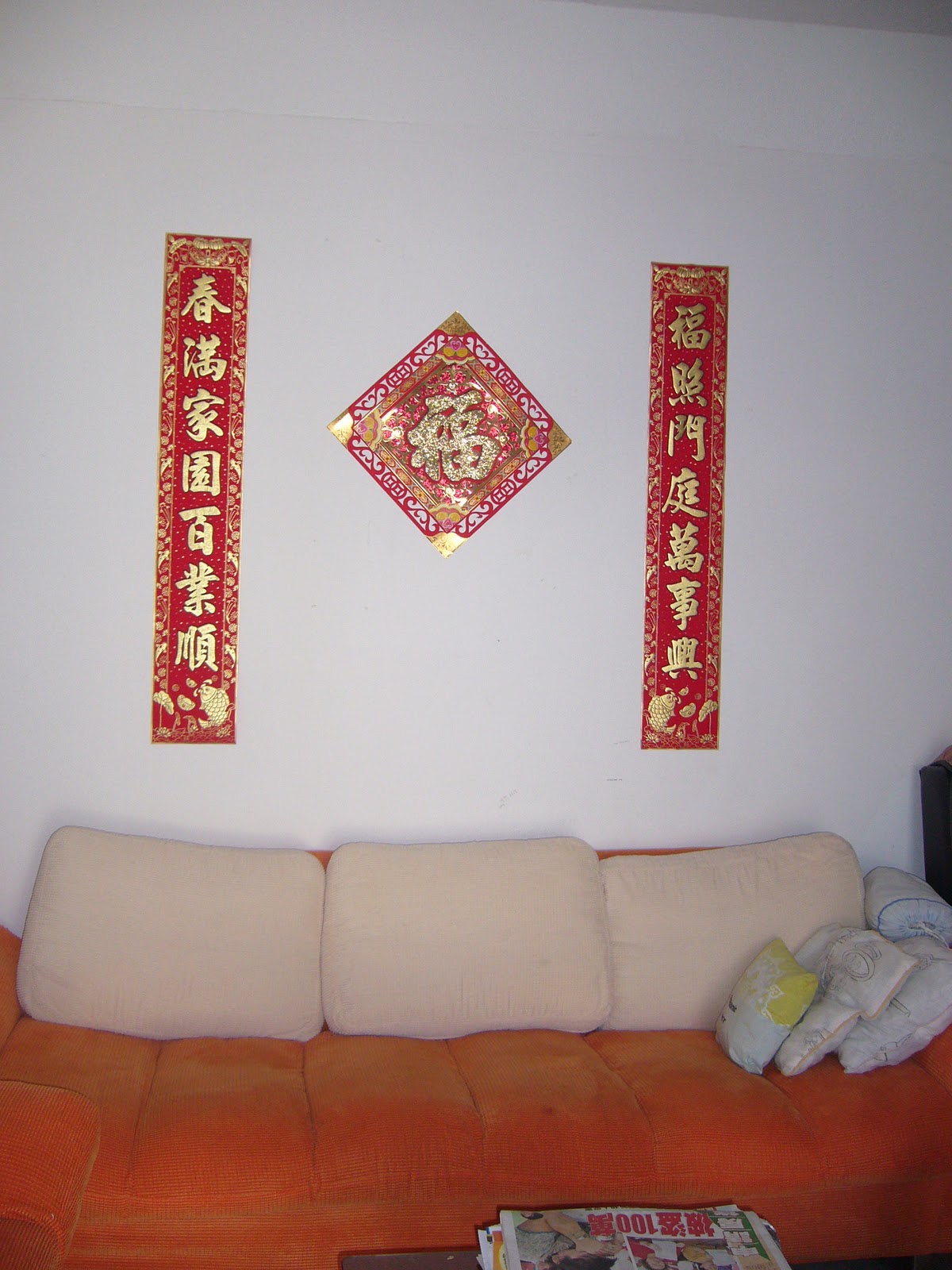
Before a week to Chinese New Year day, we start preparing New Year decoration at our house. An annual house cleaning must do before The Spring Festival arrived.  Family member busy to sweeping and vacuum every corner of the group. A little decoration must do so, spring couplets and the words of spring put on the wall at our living room. These couplets, short poems written in Classical Chinese, were expressions of good wishes for the family in the coming year.

New Year Eve

For New Year Eve the family member from near or far must came back get together for celebration the reunion dinner. Chicken and fish must include for the Eve dinner according to the old Chinese traditionally. We having steamboat dinner that night still got fish and chicken, for me easy way to cook and my family member like to eat. After having the Eve dinner we go to pray at “Guan Yin” Temple at Jalan Ipoh Kuala Lumpur where near by my house.


First Day of the New Year

Usually family members gather on the morning for the first day, red packet (Chinese word : Ang Pow) will be given to the children and unmarried members of the family. Red packet also given to the unmarried visitor and children who come to visit each other family or friends. After visiting our family member, at the afternoon they suggest go for a half day trip at Genting Highlands to try their luck at Genting Highlands Casino. Children who can not go in to the Casino, they play at the indoor Theme Park at the First World Plaza.  
Second Day of the New Year
The second day of the New Year is usually for visiting the family of the wife for a couple is married. A large feast is also typically held on the second day of the New Year. So, I went back my mother house just about 5 km from my house. That day me and my two other’s sister gather at my mom house. We having our dinner there, my mom cook a lot of food such as steam chicken, ginger duck, fry prawn, fish, lotus root & cranberry beans soup and some veggie. Whoa! Yummy, what a delicious and great dinner.


Third Day of the New Year
Third day morning we decide having Bah Kut Teh (Pork Bone Tea Soup) for our breakfast, so we run down to Klang .The famous Bah Kut Teh at Klang Name by Seng Huat restorant, operation more than 60 year!  Fondly known as “Bak Kut Teh Under the Bridge” by the local, because the restaurant really under the bridge. The Bah Kut Teh Taste not bad. After that we come back to Kuala Lumpur, and visit to Thean Hou Temple (Chinese: 天后宫) at land atop Robson Heights along Lorong Bellamy, overlooking Jalan Syed Putra (Federal Highway) Kuala Lumpur. It ‘s around 3pm afternoon , it’s rainy only can visit inside the Temple and inside the Hall there is a show concert singing the Chinese New Year Song by the local singer.


Forth Day of the New Year
The forth day we go to visit my sister Bungalow House at Taman Tasik Prima at Puchung. She invites us to having a barbecue dinner at her bungalow house (The lake view). The place is very nice, but this location is nearby some small factories. My sister move in the Bungalow house last Chinese New Year. The view at the lake side is beautiful. It is a good place for fishing. My brother like to fish here for relaxing to less stress from his work. I bring my children and my nephews to view the Cascadia Townhouse lake side, saw some people playing speed boat and banana boat at the lake there. In the evening we have our barbecue that already serving by my sister. There are some chicken wing, hotdog, prawn, potatoes (this all buy from Tesco Puchung), and fish (catch from the lake), Fruits and cool drink such as Kut Fa Tea (cook by my sister) which can less the heat for the body. My brother inlaw is a Chinese Tradition Acupuncture Master, we call him Master Leong. His medical centre at 4th floor Menara Promet Kuala Lumpur and Taman Kinara Puchung, Label by the name : The Tole Acupuncture and Herbal Medical Centre Sdn Bhd. We went back late at night around 10pm. Next day is the school open day. Very Tiring….     
15th Day of the New Year - Lantern Festival
The New Year celebrations ended on the 15th of the First Moon with the Lantern Festival. On the evening of that day, people carried lanterns into the streets to take part in a great parade. Young men would highlight the parade with a dragon dance. The dragon was made of bamboo, silk, and paper, and might stretch for more than hundred feet in length. The bobbing and weaving of the dragon was an impressive sight, and formed a fitting finish to the New Year festival.

Wednesday, February 16, 2011

Taman Negara Malaysia National Park


What is Mother Nature's Treasure Trove and Adventure Attractions, let’s explore it’s the nature’s environment National Park Taman Negara Pahang at Malaysia.

Malaysia lures adventurers; it’s never ending charm of one of the oldest Rainforest in the world. Taman Negara is the most extensive protected area of pristine, lowland and evergreen rainforest in Malaysia the more than 130 million years old virgin tropical rainforests at the Pahang. It is the eexcellent & perfect place for travelers who love nature and wild life in the jungle. Every year Taman Negara attracts thousands of local & international travelers.

The nature park of Taman Negara also lies in Gunung Tahan (Tahan Mountain),
the most difficult mountain to reach the peak. You have to bring along your own food and tent on the travel to the top of the maountain, because it may be take you a 7 days journey to the top.

Taman Negara is the home of some rare mammals animals, such as Malayan Tiger,  Crab-eating macaque, Sumatran Rhinoceros, Great Argus, Red Jungle fowl, Malayan Gaur and Asian Elephant. The birdlife, rare Malayan Peacock-pheasant still can found here.
Tahan River has been preserved to protect the Malaysian mahseer (ikan kelah in Malay), the kelah fish can weight about 20lbs to offers the challenge and terrific fight, a type of game fish. . Fishing at the Sungai Keniam and Lata Berkoh is a famous activity among visitors. The epiphytes rare species can be found here such as ferns, orchids, oaks laurel and conifers.
There are two place located to department wildlife. The Headquarters is at Kuala Tahan and Kuala Jetty is the branch. You must bring your identification (passport / identity card), because all visitors to the park must get permits from the Department of Wildlife and National Parks. Park permit is MYR2.00 per person, Camera/Video equipment permit isMYR5.00 per equipment, for visitor like to fishing, the fishing rod permit I is MYR10.00 per rod.

The wild life viewing, mountain climbing, fishing, camping, rapids shooting, jungle walk, canopy walk, bird watching with binoculars and many more. It is well established as one of the most popular ecotourism destination in Malaysia.
Jungle walk
Experience it, the night jungle walk at the forest, enjoy the tropical forest nightlife. When it’s become dark follow the guide, looking for insects and reptiles at the jungle. It was very impressive, a snake, several spiders, scorpions and stick insects can be found here. Anti-mosquitoes repellent are required to repel the mosquitoes, leeches and other unknown insects.  
Canopy Walk
Canopy walk is a special in the jungle. It is a rope bridge, the treetops of the jungle about 50 meters high. The world’s longest suspension bridge, 530 meters long. The Canopy Walk is a new way that you can walk over the jungle. The platforms between spans can only bear a maximum of four people at a time. The rope bridge is very strong, so there is nothing to be afraid of. You could look far and look down may be you can see something there.
 Orang Asli Village
The Orang Asli is the local natives who live in the jungle. You can visit their villages to know how the people live. How they make blowpipes and how they make fire.
Boat Cruise
Take the Boat Cruise along Sungai Tahan, relish the riverside flora and fauna and dip into the refreshing cascades at Lata Berkoh which form a natural Jacuzzi. You can stop by the Fish Sanctuary for a chance to snorkel amongst fresh water fishes.

The best time to go Taman Negara is between March and September. You can have various choices to stay, from comfortable resort-styled facilities, home stay style to tent camping at various camping grounds. A lot of accommodations are available in Kuala Tahan. You can also book from the Park Headquarters for the camp sites. The Mutiara Resorts which is located inside the park, it is luxury and comfortable, best to stay. Those budget backers can choice a home stay style at Travelers Home. During the peak season, you have to book in advance arrival to avoid avoiding depression and disappointed.
How to get there: Jerantut, a town in Pahang, is the main entry point to the park.
By Road: The journey takes approximately 3 - 4 hours from Kuala Lumpur or Kuantan via private or public transport (e.g. taxi, bus, rented cars). From Jerantut, go to Kuala Tembling where you take the boat, 3 - 3 1/2 hour ride upstream to the Park.
 By Rail: The train service to Kuala Tembling, run by Keretapi Tanah Melayu Bhd      (KTMB) is available.
  By Air: A 45 minute flight is available from Kuala Lumpur to Kuantan.

Monday, February 7, 2011

Picnic lunch at Morib Beach


Morib Beach

Morib Beach, located at the southern end of the Selangor state.

Approximately one and a half hour's of driving from Kuala Lumpur. It is the wonderful place for some quiet and peaceful relaxation.
Surrounded by whispering casuarinas and swaying palms, you can comb the beaches of Morib during low tide, searching for seashells or watch small crabs scuttle away and disappear into the sand. You can even set up a mat and settle down to a picnic lunch beside a shady casuarina grove. Morib is definitely a nice relaxation place for weekend getaway.

For history lovers Morib is also home to a wealth of historical sites. There are the ruins of old government buildings and the royal graves at Jugra, including an abandoned palace from the 1800's.

Those who are looking for night life you can seek accommodation at nearby Hotel Sri Morib.

About 5km from Morib Beach, Gold Coast Morib is under development. According to Gold Coast Morib plan, there will be more than 600 units of condominium housed within a 3-9 storeys terrace, facing the Straits of Malacca. Upon completion, Gold Coast Morib is expected to attract more visitor to Morib.

Getting There
Morib is accessible from Kuala Lumpur by the Federal Highway or the North Klang Valley Expressway via Klang. From Klang, proceed to Banting before reaching Morib.
To reach Morib by bus, you should take a Kuala Lumpur-Banting bus from the Klang Bus Station in Kuala Lumpur. From Banting, take another bus or taxi plying the Morib route.